
Slime-Mold, Yeasts and Bacteria, Oh My!
Emily baked bread with a recipe used in ancient Rome. We all ate the bread. The talk centered on 3 microscopic elements that fascinate her. . . Yeast, Slime-molds and bacteria.
Emily baked bread with a recipe used in ancient Rome. We all ate the bread. The talk centered on 3 microscopic elements that fascinate her. . . Yeast, Slime-molds and bacteria.
On an open window sill on Windsor Terrace, she allowed the wild, uncultivated yeast of the bread to rise, slowly the grains carry wild yeast that have settled on them. The yeasts are natural airborne ferments that generate in dough left exposed to a cool atmosphere under specific conditions of moisture and temperature. It is not cultivated like the modern yeasts added to bread or beer. The bread was delicious. . .
She also explained through videos the self-organizing principles of slime mold, which through a series of simple moves, form complex systems that allow their own reproduction and movement across surfaces to food sources.
We discussed the increasing medical understanding of the importance of bacteria to all aspects of our physical health and even brain chemistry. The bacteria in our bodies outnumber our own cells 10 to 1 and are estimated to weigh between 2-6 pounds.


Issues of Sikh Cultural Awareness in America
Chris walked through the process of creating a study for a memorial at the Sikh Temple of Wisconsin. The understanding of Sikhism in America is limited and this has been a cause for discrimination and violence. In order to foster awareness of the religion and its people, Chris and Harpreet proposed a cultural center and memorial to violence against Sikh’s in America. The talk traced the basic premises of Sikhism through its cultural expressions especially those pertaining to clothing, while walking through the process of creating a memorial.
Chris walked through the process of creating a study for a memorial at the Sikh Temple of Wisconsin. The understanding of Sikhism in America is limited and this has been a cause for discrimination and violence. In order to foster awareness of the religion and its people, Chris and Harpreet proposed a cultural center and memorial to violence against Sikh’s in America. The talk traced the basic premises of Sikhism through its cultural expressions especially those pertaining to clothing, while walking through the process of creating a memorial.
The memorial took on site specificity as well as universal themes of light and water to relate to the widest possible audience for furthering awareness and peaceful coexistence. Powerful questions resulted in the idea of memorializing the 2012 mass shooting that occurred at the Sikh Temple in Oak Creek Wisconsin. The power of the memorials and vigils held after the events would come from shifting the focus of the events to the expression of unity, inspired greatly by the overwhelming show of support that occurred after the shooting.
Memorials, despite their architectural or symbolic intent, are always created in a specific political climate with sensitivities to a complex array of issues. Emotions of those affected collide with the realities of money, fundraising and the needs of a specific community.

The Future of Now
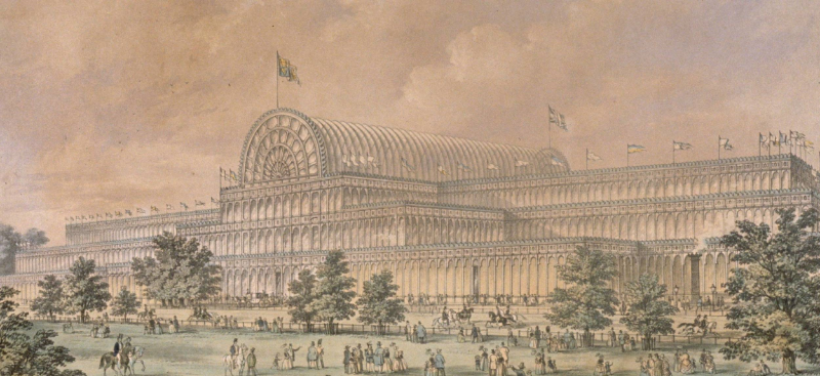
Sanmita presented a series of ideas about architecture’s evolving role in relationship to technology. Starting with classic pencil illustrations of the Crystal Palace, a modular structure erected in 1851 from wood, iron and glass, we explored this monument to technology and expression its age. Sanmita talked about how architecture has evolved with technology and continues to do so.
Architectures’s Inevitable Evolution
Sanmita presented a series of ideas about architecture’s evolving role in relationship to technology. Starting with classic pencil illustrations of the Crystal Palace, a modular structure erected in 1851 from wood, iron and glass, we explored this monument to technology and expression its age. Sanmita talked about how architecture has evolved with technology and continues to do so.
Technology provides opportunity to future trends that will affect the business of architecture over the next 20 years; it addresses factors including globalization, climate change, the growing use of computers. Today, physical location is less relevant as a designer.
We had a heated discussion about the role of computers in design. The generation of architects graduating from school now is the first generation to have been using computers throughout their entire lives. The reliance on computers as design tools and the current use of parametric modeling tools as means to generate space are hotly debated topics. As computer generated form becomes the norm for a generation of young architects, how does that reconcile with the current building technology and construction industry?


The Body in Architecture
The body in architecture. Bodies in space. Chris gave a talk for a class at NYIT in 2011 about the body in architecture. That lecture spanned the way the body has been perceived in architecture throughout history, particularly in reference to scale—from Renaissance ideals of human form to current ergonomic design. Here, he picked up where he left off, diverging into a lecture about ways art conceives the body in space.


The body in architecture. Bodies in space. Chris gave a talk for a class at NYIT in 2011 about the body in architecture. That lecture spanned the way the body has been perceived in architecture throughout history, particularly in reference to scale—from Renaissance ideals of human form to current ergonomic design. Here, he picked up where he left off, diverging into a lecture about ways art conceives the body in space.
Using the comic book art of Jack Kirby and Todd McFarlane as examples, he discussed the change in comic art from the body as a representation of an ideal “superpowered” man to an expression of form and action in the 2D composition of individual frames. Spiderman’s utilitarian webs become baroque, mannerist and expressive as the comic form evolves. In comics, action is represented with illustration through movement trails, explosions, pows, thwacks and bangs, giving the form of action equal visual real estate to the bodily form.
From here, we discussed Picasso’s “Ma Jolie” and some of the concepts of high analytic Cubism that see the body completely dematerialize in space and become one with the background, collapsing a sense of space and also time. We rounded out the discussion with a review of Robert Rauschenberg’s “Erased De Kooning,” in which Rauschenberg was given a sketch by De Kooning; upon erasing the sketch, he ended a journey of De Kooning’s abstract form of a woman in erasure. This was discussed as a conscious expression of meaning through erasure—a respectful homage to the importance of De Kooning’s work.