
NYC Urban Garden Standouts
Greenacre Park was designed by Sasaki, Dawson, DeMay Associates with Masao Kinoshita as lead designer. Greenacre Park opened in 1971 as a “vest” pocket park and is privately funded and maintained by Abby Rockefeller Mauze’s Greenacre Foundation. The park is 60-feet wide by 120-feet deep, and conveys an impression of far greater size through a series of well-defined, separate spaces, lush planting, textural variation, and the dramatic use of water.
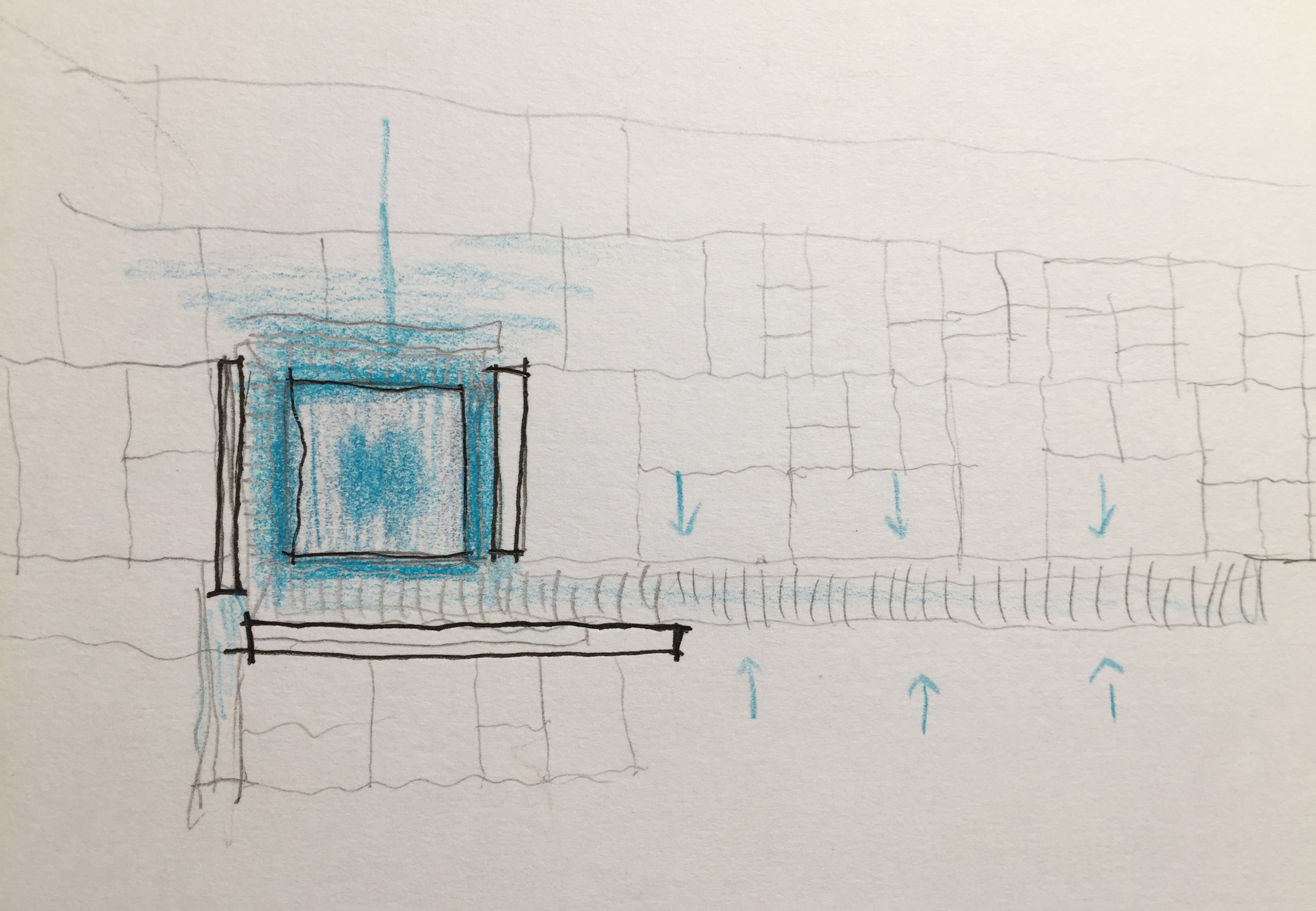
Greenacre Park was designed by Sasaki, Dawson, DeMay Associates with Masao Kinoshita as lead designer. Greenacre Park opened in 1971 as a “vest” pocket park and is privately funded and maintained by Abby Rockefeller Mauze’s Greenacre Foundation. The park is 60-feet wide by 120-feet deep, and conveys an impression of far greater size through a series of well-defined, separate spaces, lush planting, textural variation, and the dramatic use of water. Separated from the street by trellis covered steps, the first terrace is shaded by honey locusts and introduces water first as a fountain and then as a runnel. The dramatic 25-foot cascade fountain in the rear sunken terrace is the culmination of the garden, open to the sky and set off from the other terraces by lush evergreen plantings.\
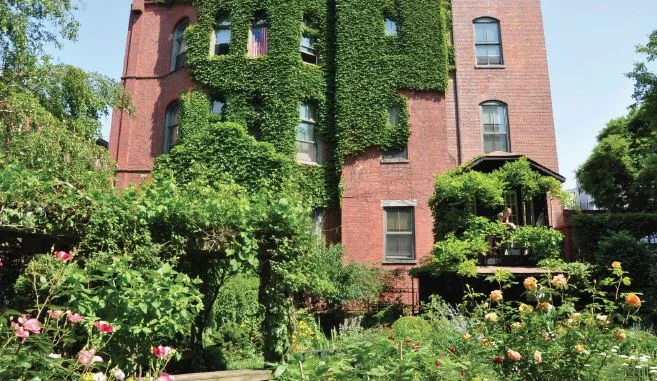
Located in the East Village on 6th Street between Avenues B and C, 6BC is a community garden but is structured like a botanical garden. The garden includes hundreds of native and non-native plants rather than the more common vegetable plots. The garden was founded in the 1980s on a rubble strewn vacant lot. and has been able to withstand the threat of development over the years. Today the garden’s land has been permanently set aside for public use as part of the New York City Parks system. 6BC us a Green Thumb garden and is run and maintained by community members.


Urban Garden To-Do List
Identify and remediate contaminants.
Reuse suitable existing site elements to make landscape features such as retaining walls and rubble to shape constructed landscapes or planting beds.
Keep water on site through means of planting, permeable surfaces and proper drainage. This minimizes the use of the already over-taxed municipal sewer system. Use collected site water for irrigation by collecting and storing it in an underground cistern located on the site.
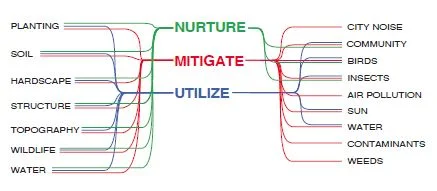
Identify and remediate contaminants.
Reuse suitable existing site elements to make landscape features such as retaining walls and rubble to shape constructed landscapes or planting beds.
Keep water on site through means of planting, permeable surfaces and proper drainage. This minimizes the use of the already over-taxed municipal sewer system. Use collected site water for irrigation by collecting and storing it in an underground cistern located on the site.
Use native and compatible species to foster wildlife, promote responsible use of water and reduce erosion on sloped portions of the site.
Use species grown at local nurseries to reduce transportation and energy costs. Bring in topsoil from a known and nearby origin.
Strategically use plants to cool, shade and windbreak certain areas of the site. Paved surfaces absorb heat, so planting as surface material creates a cooler microclimate.
Let the garden’s yearly life-cycle cycle run its course. Perennial planting regenerates and stabilizes the soil in the winter months. Dormant plants act as insulation of the root systems in the winter and replenish the soil’s nutrients without added fertilizer.
After making reasonable hypotheses on the sites microclimate, plant. Adjust planting as necessary in response.

Moving Water
Water features add tremendous value to a garden. They engage all the senses. In an urban environment, the sound of water becomes an important feature to cover the noise of the city and immediately transport the visitor. Standing water can provide a home for mosquitoes and other pest insects, so moving water is preferred. Waterfalls are an effective way to maximize the impact of water in an urban environment. With a recirculating water, you get motion and sound without standing water.
Water features add tremendous value to a garden. They engage all the senses. In an urban environment, the sound of water becomes an important feature to cover the noise of the city and immediately transport the visitor. Standing water can provide a home for mosquitoes and other pest insects, so moving water is preferred. Waterfalls are an effective way to maximize the impact of water in an urban environment. With a recirculating water, you get motion and sound without standing water.
For cooling purposes, misting systems are highly effective. In the humidity of New York summer, the mist appears cloud-like and provides a mysterious effect. In the courtyard a misting system can be incorporated into the face of the building and provide relief for the few unshaded areas during the hottest summer days.
Water features require a recirculating pump, preferably with a u.v. filter to discourage the formation of bacteria if it is accessible for people to touch. This can be connected to the water line and an electrical source.


An Urban Garden in Brooklyn
Without design intent and maintenance, an urban garden is a result of uncontrolled, pre-existing, forces. Airborne seeds or those carried by animals, invasive species, pollutants, litter and storm water reshape the life of the urban site. The process occurs in vacant lots throughout the city.
Without design intent and maintenance, an urban garden is a result of uncontrolled, pre-existing, forces. Airborne seeds or those carried by animals, invasive species, pollutants, litter and storm water reshape the life of the urban site. The process occurs in vacant lots throughout the city.
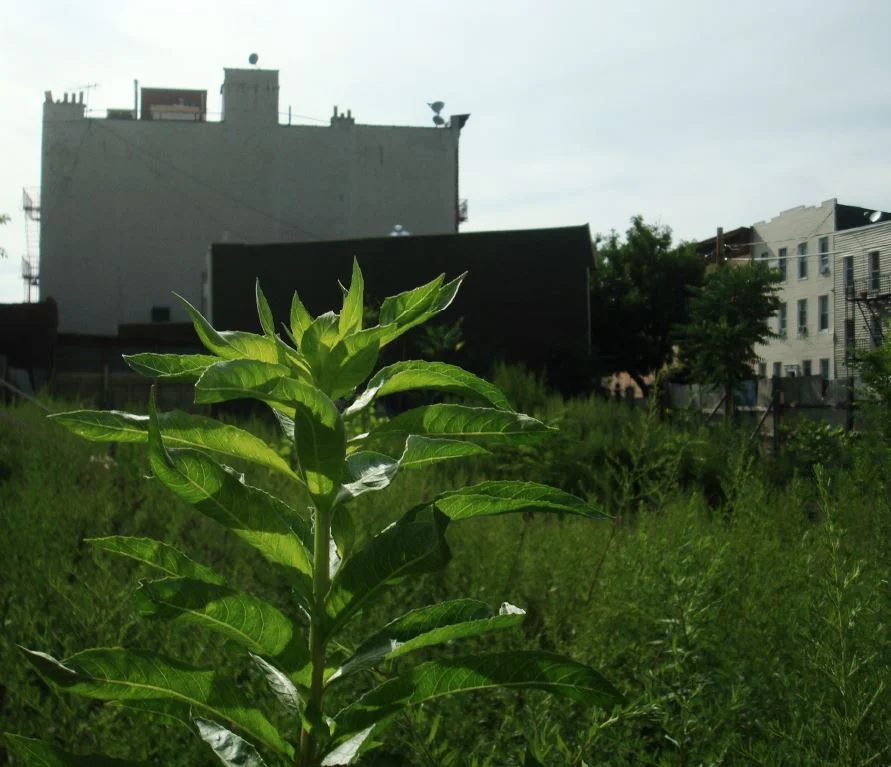
The size of an urban lot cannot achieve the scale and diversity needed for a self-sustaining ecosystem. The garden must be maintained by its occupants to remain in its desired state. “Nature” is reconstructed in an idealized human form. This is the space for design to enter the landscape of the city.
In order to bring in plants and other wildlife, it is necessary to colonize the site, to import and maintain the life that will flourish there. We tend to see the base condition of garden as a rural, “pure” landscape, the ideal condition of the earth. Topsoil, subsoil and rock make up a layer cake, all resting on a bedrock foundation, which extends deep into the earth.
In low-lying, urbanized Brooklyn, this is not the condition. The land is comprised of a complex system of layers that include organic matter, debris and rubble, soil, historical fill, gravel, rock and sand. Each layer is a physical result of the actions of the people who inhabited and utilized the site over the course of hundreds of years.
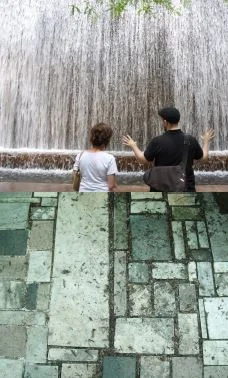
To choose to make a garden in such a site is to sculpt and construct a new ground, to embrace and navigate the complexities that exist on the site. Understanding that complete isolation from contaminants is impossible, we must choose the extent and kind of remediation that the site undergoes.
Through understanding of the physical condition of the site, the urban garden can become more than a remediation project or a heroic example of bringing “nature” back into the city. New occupants - plants, structures and people - view the space as a self-contained recreation of an ideal world. Like many of the people throughout the history of New York, this type of design brings in ideas and values imported from elsewhere, interpreting its new context with the hopes of achieving something greater.


Stamped Bricks
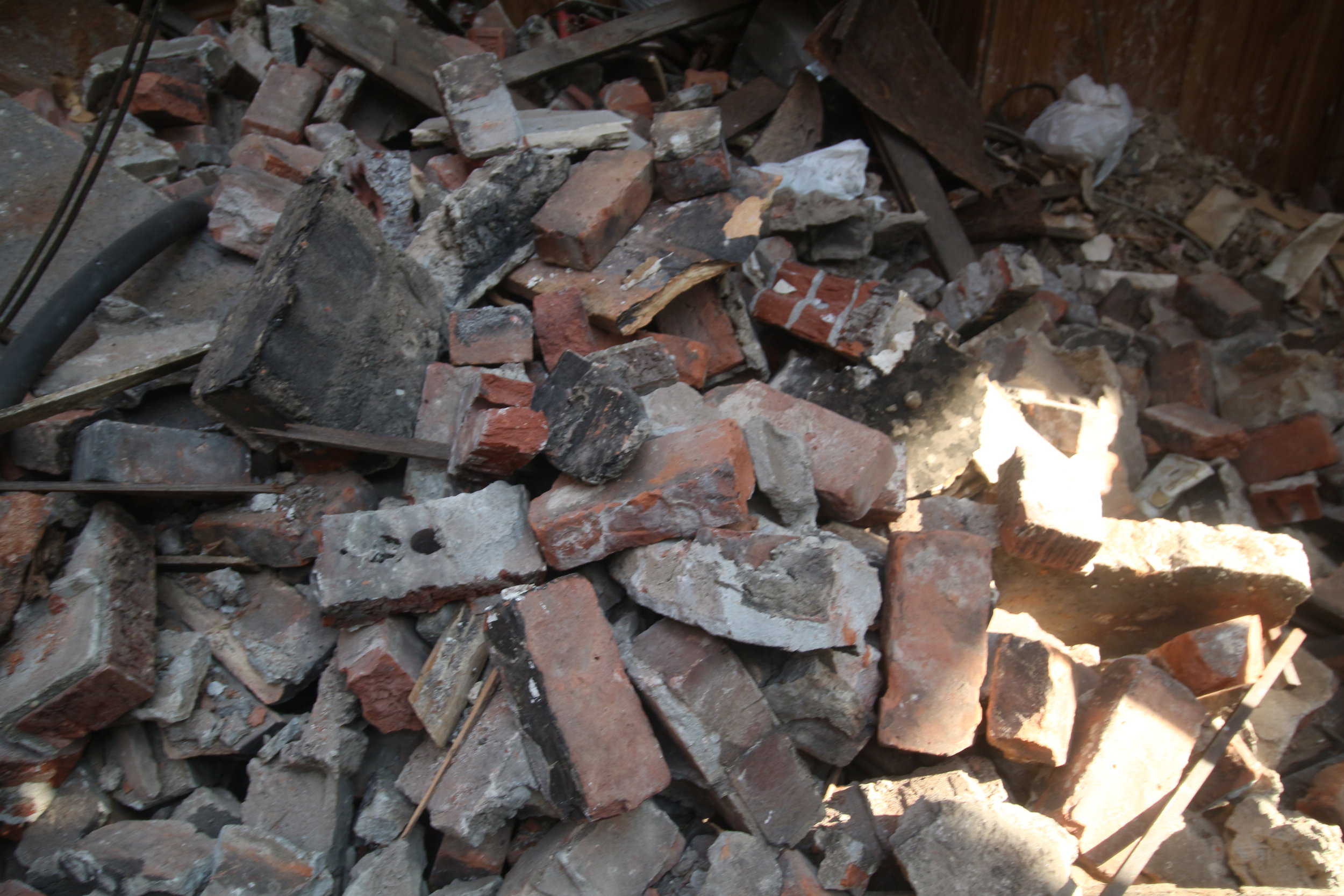
Taking down some walls, we start finding stamped bricks. Names stamped at the time of their manufacture, denoting their makers- the families, yards and towns of the Hudson River Valley Brick companies. The names are all different, which implies that the portion we are currently demolishing, a previous renovation, was constructed from several different lots of brick. They were being used as interior walls and wouldn’t be visible under layers of plaster. “Back brick,” we call it.
Taking down some walls, we start finding stamped bricks. Names stamped at the time of their manufacture, denoting their makers- the families, yards and towns of the Hudson River Valley Brick companies. The names are all different, which implies that the portion we are currently demolishing, a previous renovation, was constructed from several different lots of brick. They were being used as interior walls and wouldn’t be visible under layers of plaster. “Back brick,” we call it. The contractor (in 1950?) bought a mixed lot for a better rate. Being from different makers, there would be little consistency in the form and color of the bricks. Some may have already been damaged to a degree. A lesser grade. Didn’t matter. You wouldn’t see them anyway. They were just going to get covered with plaster. The stamps of their makers, placed face down in the hastily applied mortar.
The names of the companies stamped on the brick intrigue us, even when the walls are gone. Each individual brick bears the name of its maker. They carry that bit of history. Separated from history, these names are now unfamiliar; we are confronted with words that have very little meaning. Decorative linguistic nonsense.
If you put your nose up to the glass of the Donald Judd house/Foundation in SOHO, you’ll see a sculpture on the floor by an artist named Carl Andre. The piece is called “Manifest Destiny.”
There are 8 bricks stacked, the stamp of their maker “EMPIRE” repeated on the faces. The piece was conceived in 1986. The Empire Company went out of business in 1940. That’s minimalist sculpture. We understand that this man-made form can be branded and infinitely reproduced, own the space it occupies. Vertical, like the Empire State building. It says a lot with a little. You can think it’s about capitalism and conquest or just a stack of bricks with words on them.

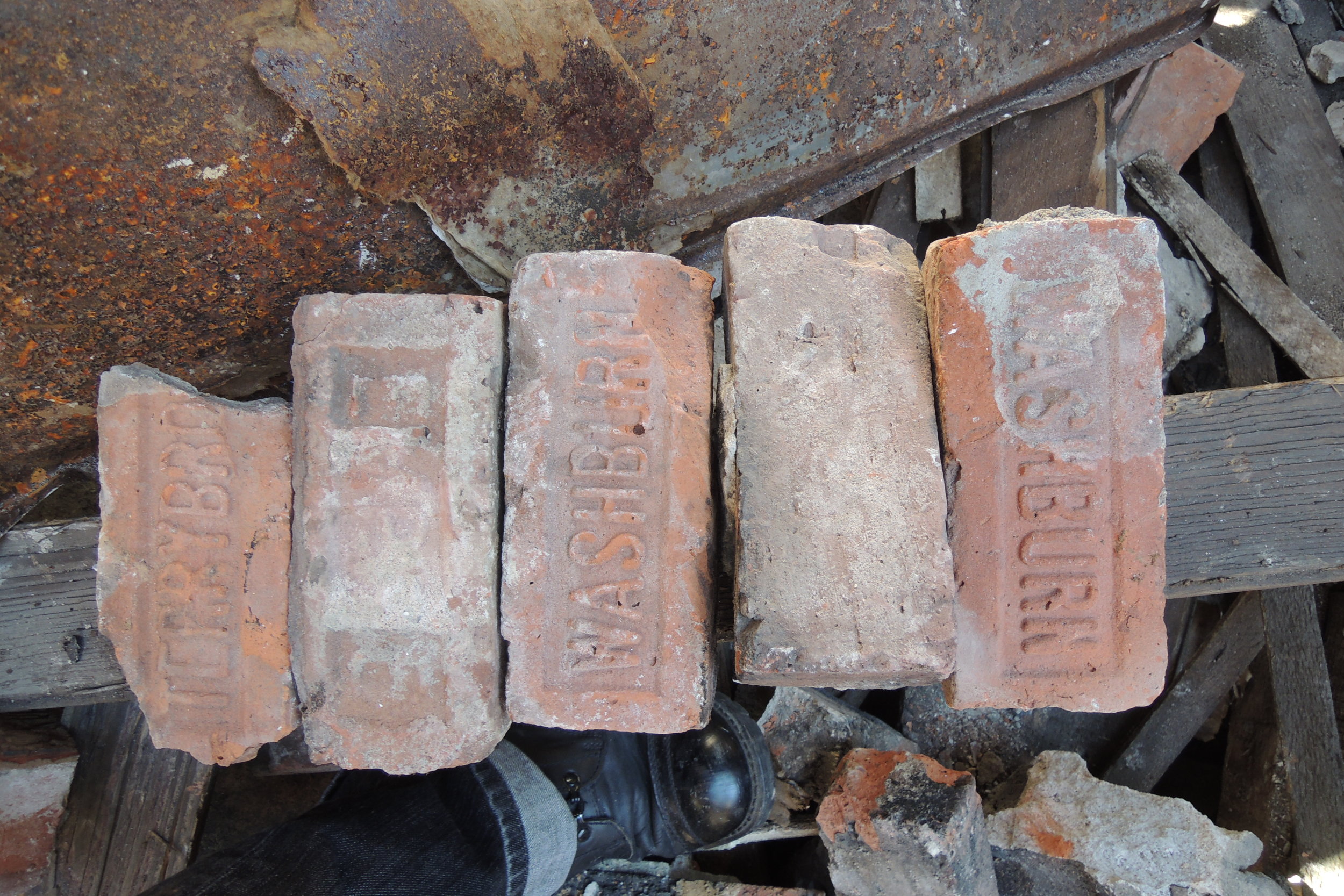
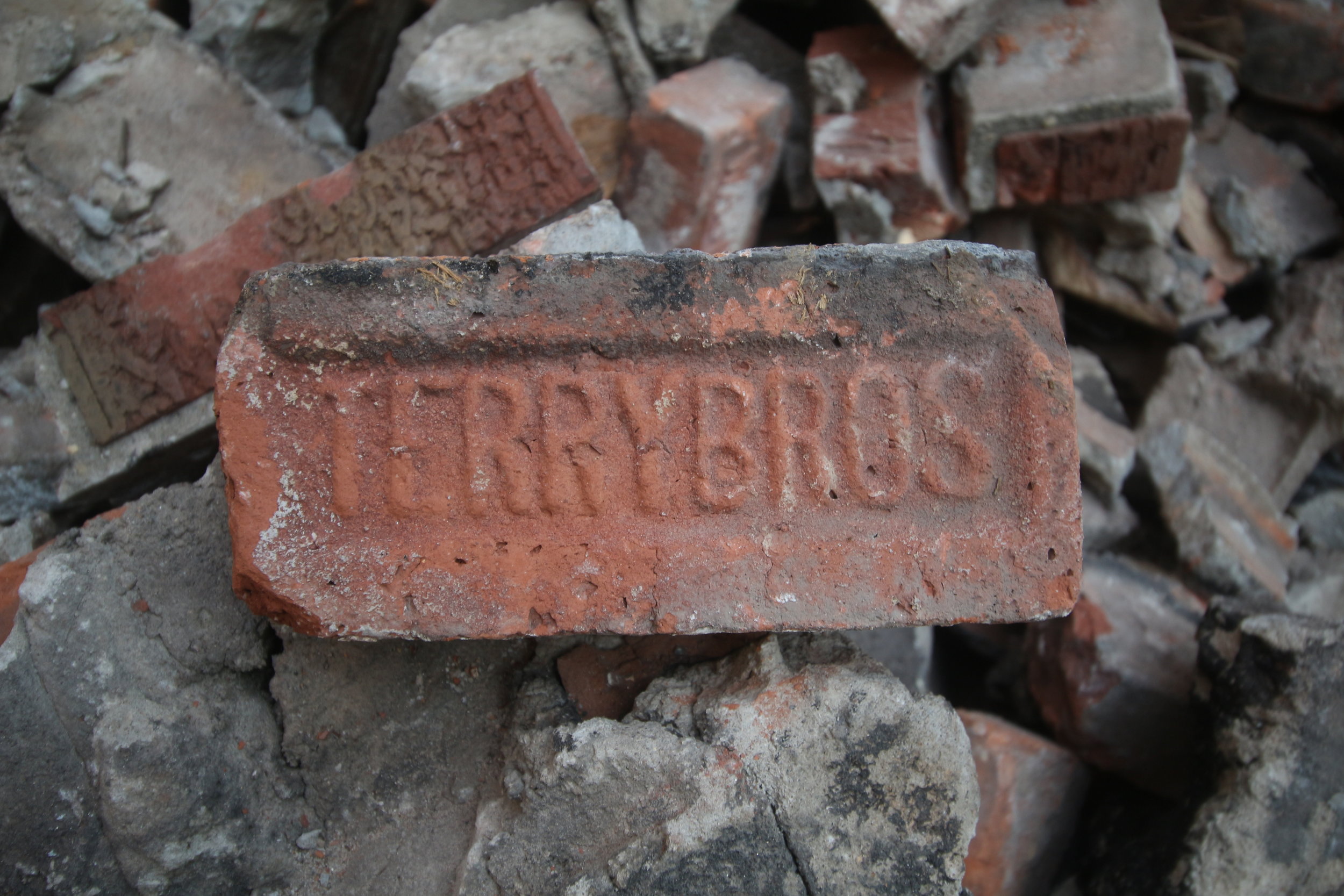
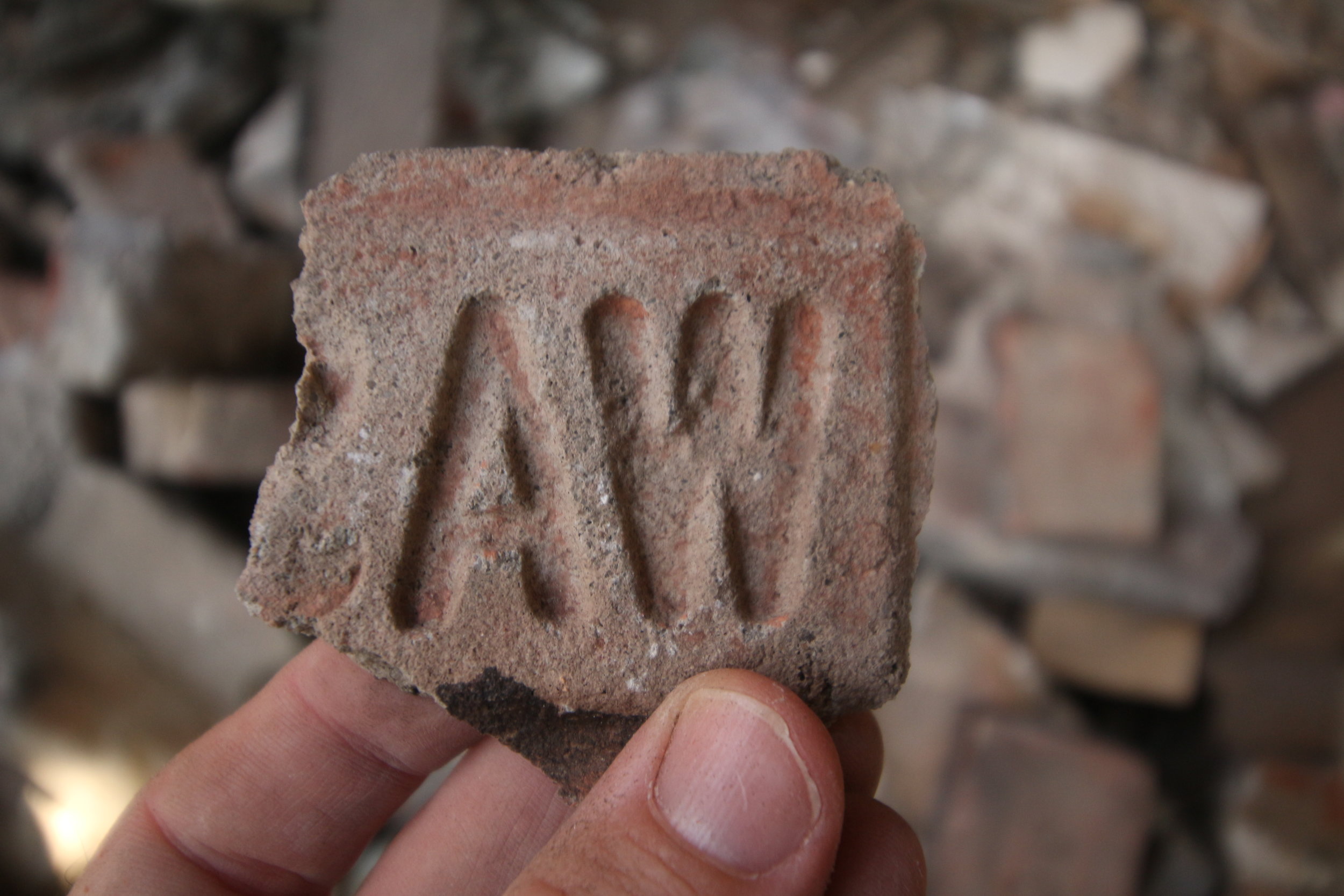
We plan to use some of these in the new walls, have some of these extinct yards represented alongside today’s paint tags, cryptic and decorative graffiti.
Great site on Hudson Valley Bricks -
http://brickcollecting.com/collection.htm
More on Carl Andre -
https://en.wikipedia.org/wiki/Carl_Andre