Moving to The Country?

Thinking of building in the Country? Don't. At least stop and think about it critically.
A slew of new developments are marketing to New Yorkers fleeing the city under the guise of sustainable country homes. Find out how you can actually contribute to health and environment by how and where you live.
What's sustainable about for-profit companies destroying 150 acres of farmland and selling inexpensive houses?
This has been happening for ages and is responsible for some of the worst environmental destruction Americans have wrought. We're now seeing it under the guide of "health." Past generations have used the exact same language to brand ex-urban developments. The difference now is that internet bandwidth has increased our ability to spread even further, making the destruction and fossil fuel usage even more extensive.
There is exhaustive proof that tampering with pristine sites not only destroys the immediate surroundings, but disrupts larger ecosystems, eventually making "nature" an archipelago of disconnected wildlife islands, decreasing biodiversity. The truth is that we don't even understand the impact of what we destroy. We know that a massive die-off of bees is bad for pollination, but what about underground networks of communication between trees, removal of soils filled with microbes that took centuries to form? When you disrupt these systems, the unintended consequences are great and the science is beginning to grapple with the consequences as we make it too late to attend to them.
If you don't believe in the city, ask yourself why? Is it fear? Were you born in the suburbs? Why not go back there, invest in an existing community? You may find that your suburban past is now a more diverse and interesting place to revisit. You may find that you can make a change there.
We have made this mistake before- suburban sprawl and "white flight" are harbingers of racial inequality and environmental destruction. Bandwidth gives us the opportunity to work anywhere. But who does it serve?
We are separated from our communities and tied into new ecosystems controlled by tech companies. You are now an avatar, a virtual entity, participating in the same mass-scale environmental destruction that your grandparents and parents generation did.Re-use, recycle, renovate, think about it. Re-invest and reinvigorate existing developments, communities and ecosystems.
Our escapist impulses don't have to contribute to further environmental destruction of a finite earth. Within our lifetimes we will see mass migration of climate refugees away from uninhabitable equatorial and low lying regions. These people weren't "priced out" of Brooklyn. Their homes are made uninhabitable by our collective actions- they will be starved out of Syria and flooded out of Bangladesh.

Streetscapes
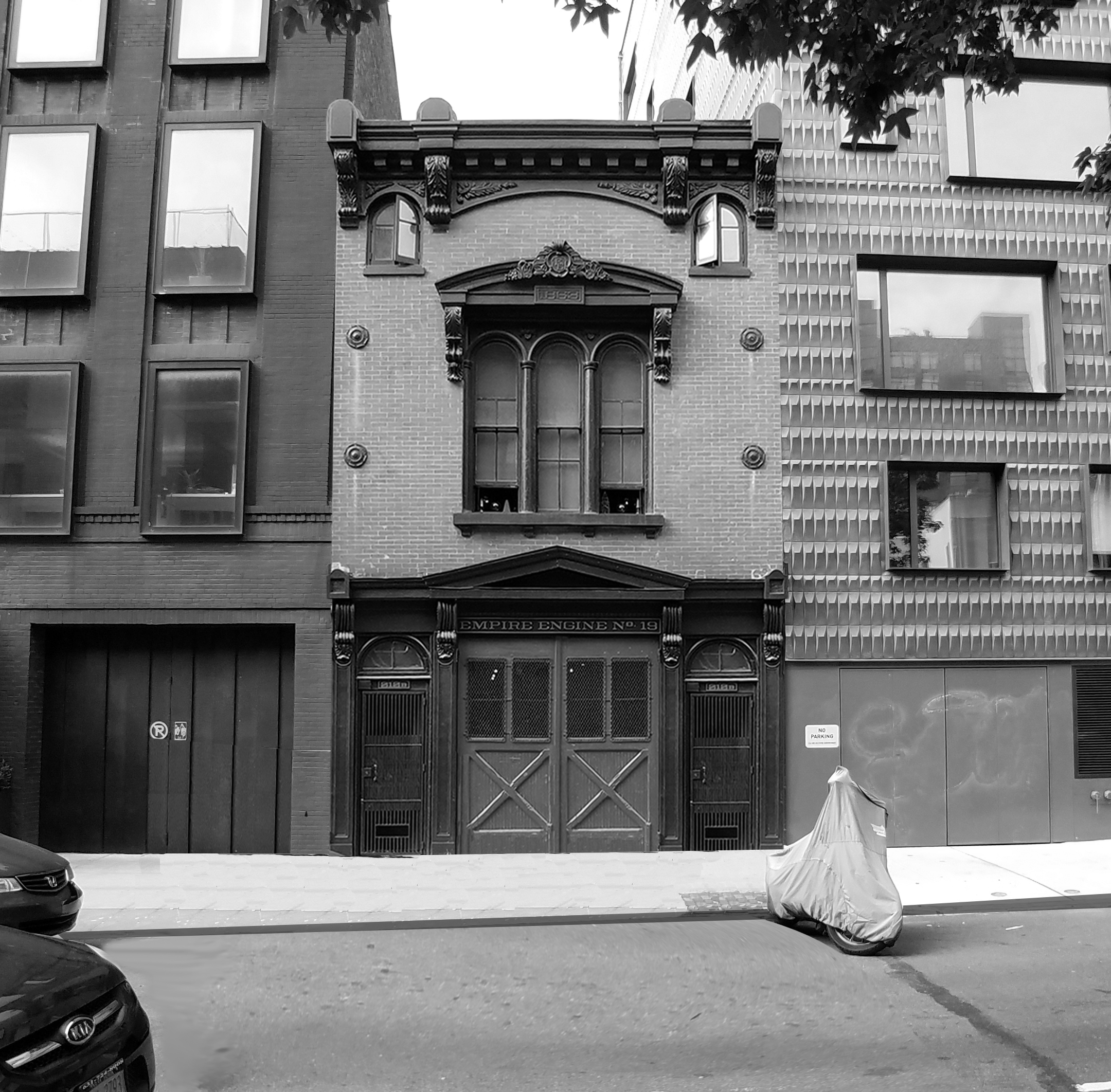
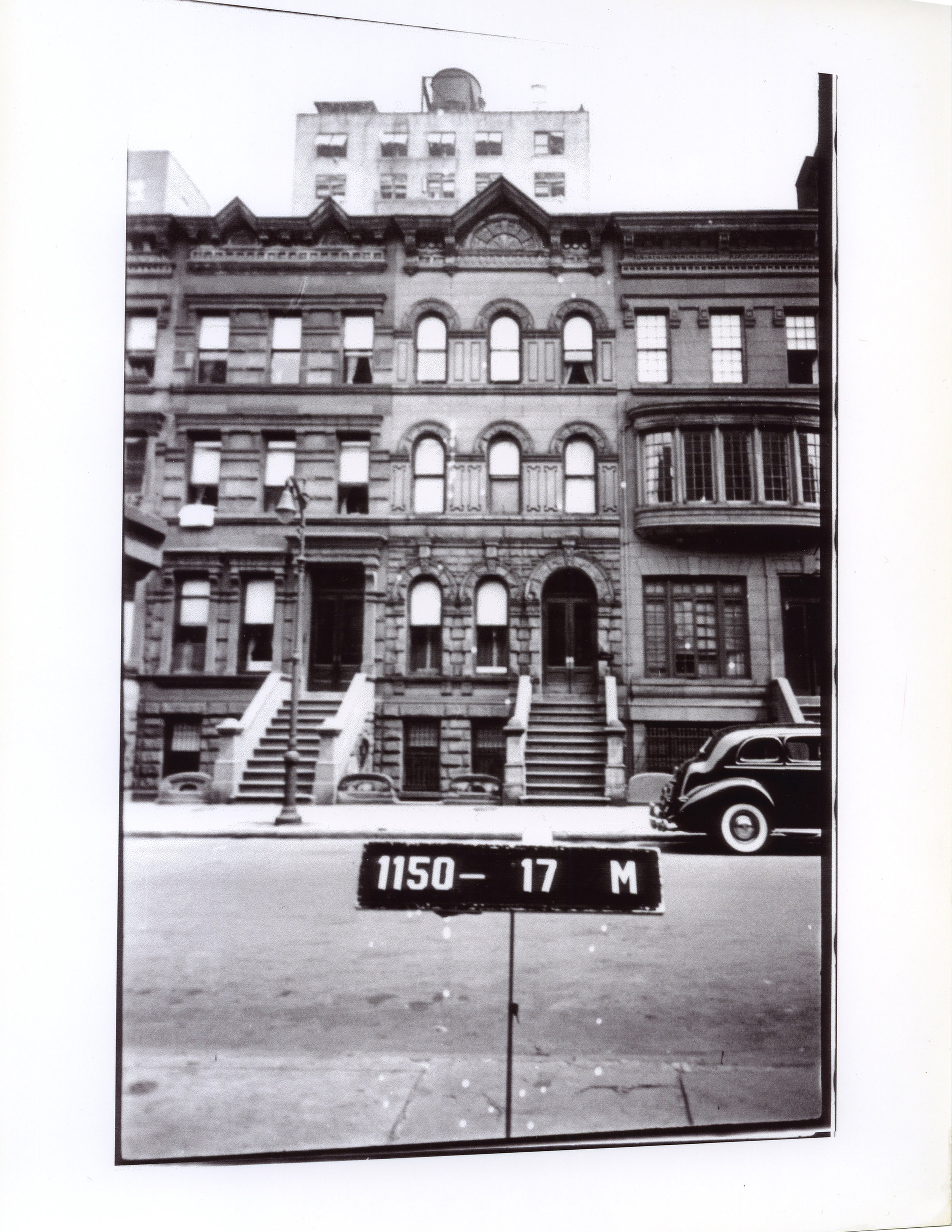
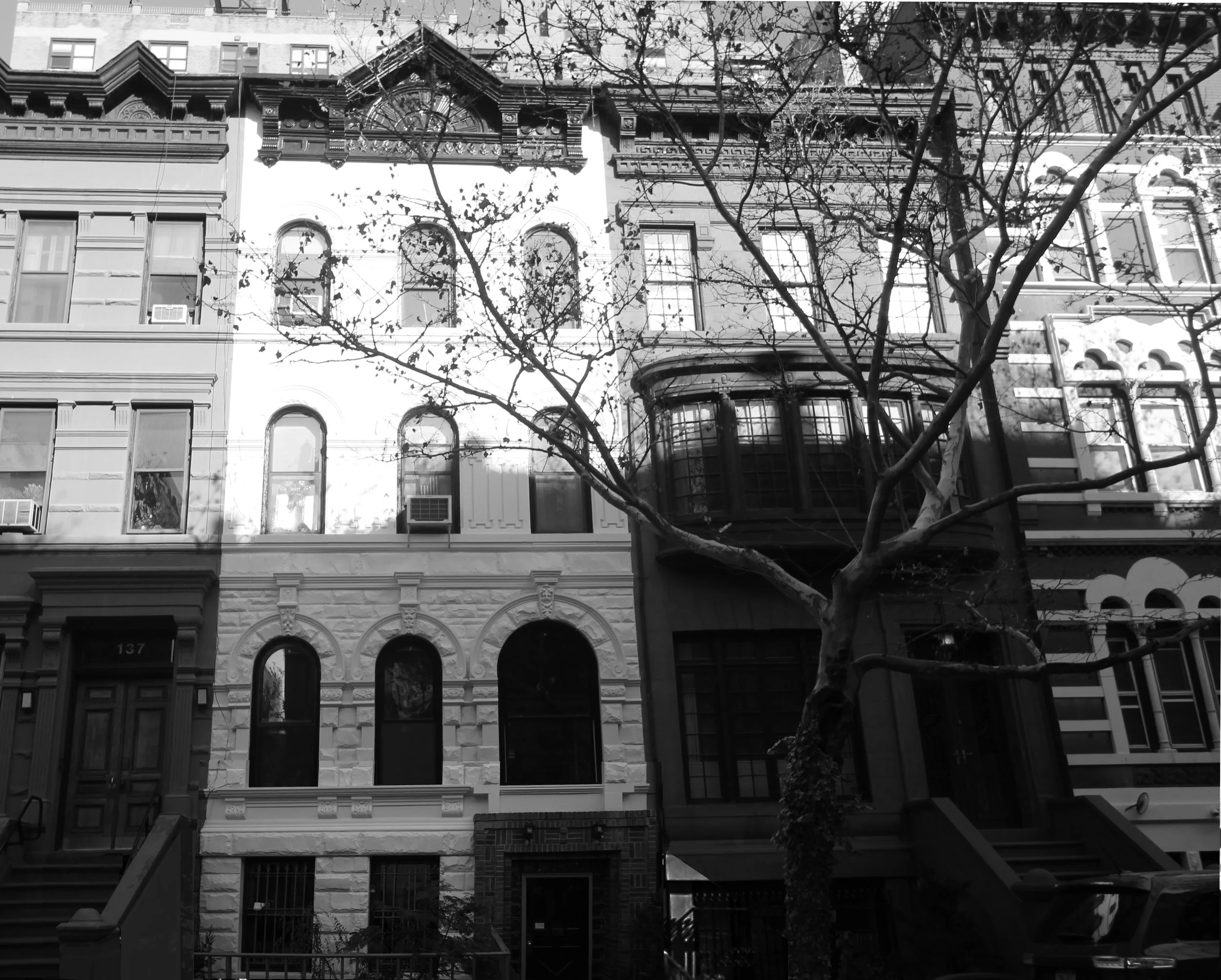
We respect history. Working in New York City, we encounter a variety of historical conditions on both the inside and outside of buildings. We work to preserve the city’s character and reinterpret its history. We provide services to coordinate with city agencies to enliven old buildings and improve the streetscape.
We respect history. Working in New York City, we encounter a variety of historical conditions on both the inside and outside of buildings. We work to preserve the city’s character and reinterpret its history. We provide services to coordinate with city agencies to enliven old buildings and improve the streetscape.




Wall Sections
Maybe our street art gallery could expand to sell other wall prototypes- decorative screens from short-lived restaurant ventures, student funded architecture graduate school project constructions, speculative and experimental prototypes derived from the current revolution in parametric modelling and 3d printing. Maybe even discarded prototypes from the Mexican border wall. . . pieces of the Berlin wall. Scratched and vandalized walls from defunct and iconic NYC institutions, CBGBs, the Mars Bar, Chumley’s.

Maybe our street art gallery could expand to sell other wall prototypes- decorative screens from short-lived restaurant ventures, student funded architecture graduate school project constructions, speculative and experimental prototypes derived from the current revolution in parametric modelling and 3d printing. Maybe even discarded prototypes from the Mexican border wall. . . pieces of the Berlin wall. Scratched and vandalized walls from defunct and iconic NYC institutions, CBGBs, the Mars Bar, Chumley’s.
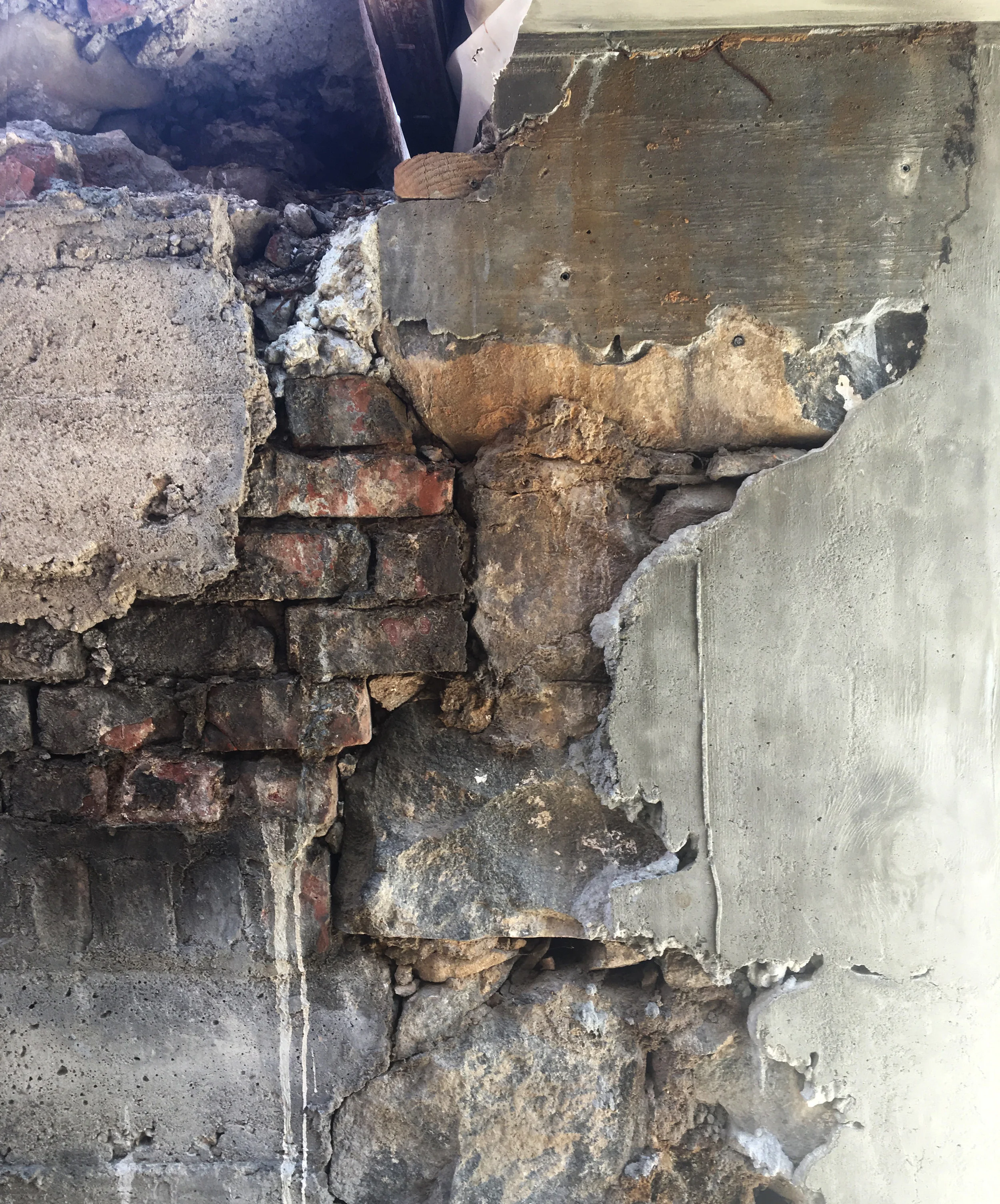
A wall section is about capturing a moment in time, a slice through a construction. Our wall Architects draw these to explain the desired construction of a building. If the wall section was based on an actual section, it would be messier, you would see the uneven mortar joints of brick, the successive layers and thicknesses of paint, dirt. Water from a recent storm, dripping off metal flashing. And zooming in further, each surface is revealed as being multiple surfaces. A front and a back, each with its own front and back, printing on the front of the poster, adhesive on the back. . . the edge condition between glue and paper. The molecules that become ink.
The wall section changes, second by second. Especially after acts of vandalism where a new sedimentary layer is deposited, waiting to be unearthed by a precise slice.

Planting
In order to maintain budget and program ideals it is important to provide large areas of low maintenance garden. This would include hardy, native perennials, shrubs and trees that are largely self-sufficient with local conditions. Their yearly cycle becomes part of the garden experience. In addition, this type of planting decreases the necessary maintenance for large areas of the garden. Allowing for energy to be spent on more specialized sections of the garden. Winter should not be a hindrance to the use of the space.
In order to maintain budget and program ideals it is important to provide large areas of low maintenance garden. This would include hardy, native perennials, shrubs and trees that are largely self-sufficient with local conditions. Their yearly cycle becomes part of the garden experience. In addition, this type of planting decreases the necessary maintenance for large areas of the garden. Allowing for energy to be spent on more specialized sections of the garden. Winter should not be a hindrance to the use of the space.
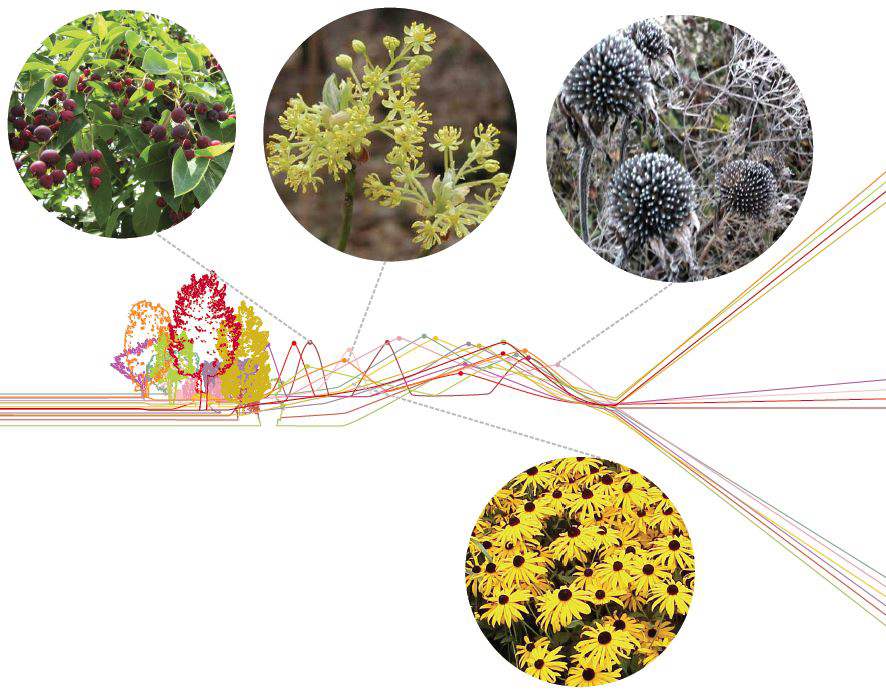
Flexibility in the garden is important. This occurs on multiple levels. The first is a seasonal flexibility of use for events. The second is a flexibility of planting to change over time. The third is the ability to transition plants and experiment with their location to keep the garden an ever-changing experience.
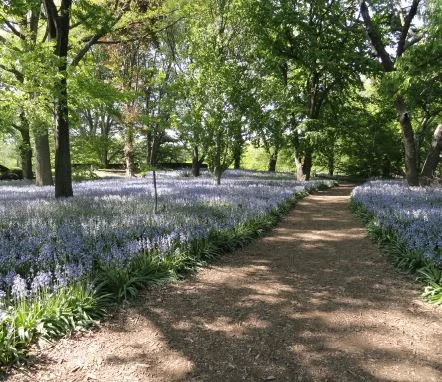
The garden is be a place for retreat. Trees, plants, topography and structures create a sense of enclosure. It must function in this way before trees are fully mature and be a part of the immediate use.
The idea of discovery is heightened in the garden. Paths are constructed of materials that allow the user to appreciate the garden at a slow place. Visual end-goals are avoided by creating a winding terrain. The garden is about an experience, not an overtly formal expression in plan. Axial paths with objects of destination take the joy out of the experience by revealing the final goal. The concept of discovery can be applied to all aspects of the garden.
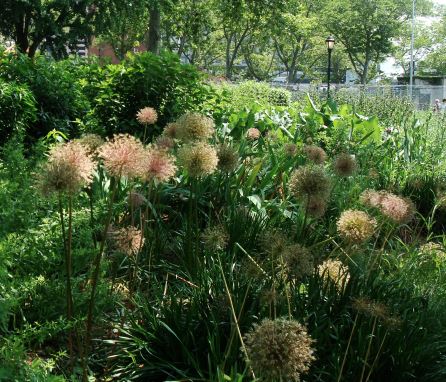
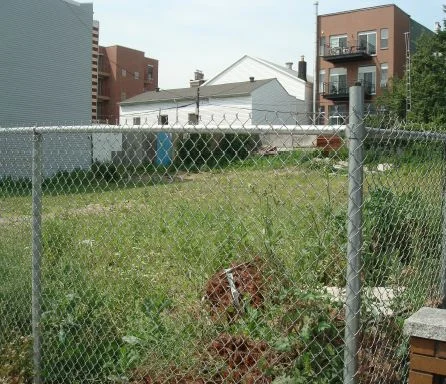
Growing through Cracks in the Real Estate Market
Similar to the community gardens founded in the 70's and 80's that “took back” abandoned and blighted land, this garden reclaims a landscape that would otherwise be developed into housing that maximizes profit at the expense of the context of the neighborhood. The location of this garden is, by default, a statement against the excess development of the area during the housing boom. Taking advantage of a dip in development, stalled projects and ruins created by the lack of financing, the site is reclaimed from a new type of abandonment. It creates a greater diversity of land use in the neighborhood.
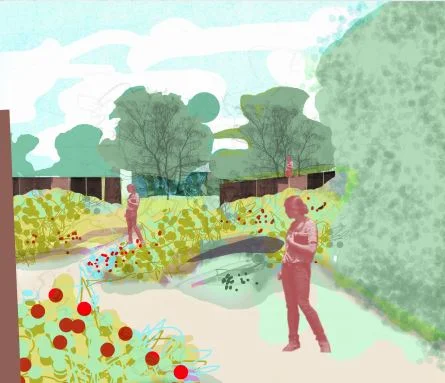
Similar to the community gardens founded in the 70's and 80's that “took back” abandoned and blighted land, this garden reclaims a landscape that would otherwise be developed into housing that maximizes profit at the expense of the context of the neighborhood. The location of this garden is, by default, a statement against the excess development of the area during the housing boom. Taking advantage of a dip in development, stalled projects and ruins created by the lack of financing, the site is reclaimed from a new type of abandonment. It creates a greater diversity of land use in the neighborhood.
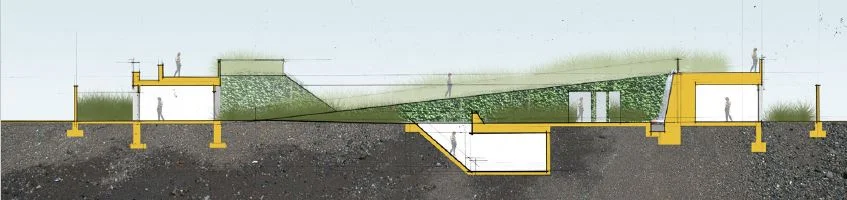
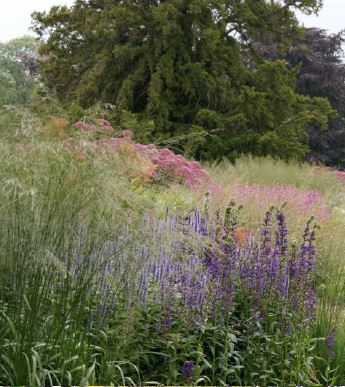
The project is an expression of landscape as a constructed environment, the creation of a ascending landscape in a flat area. By reconstructing an arable, occupied ground plane, the site can be formed by a vision that balances the goals and program with a sense of delight. The core of the design is the spatial experience, the scale of its functional spaces, and a heightened interaction with plant-life. The spatial and sensory experiences are emphasized. An unfolding path allows dynamic change through the seasons and new discoveries with each visit, involving the plants as active participants in the experience. Carefully chosen planting schemes choreograph the sensory qualities of the flora and create events over daily and seasonal time frames. By doing this, the garden will have a heightened, even exaggerated, sense of constant change.